technsave
Digital LCD Multimeter with Test Leads & Battery | NZ Stock
Couldn't load pickup availability
A Compact Digital Multimeter for Everyday Diagnostics
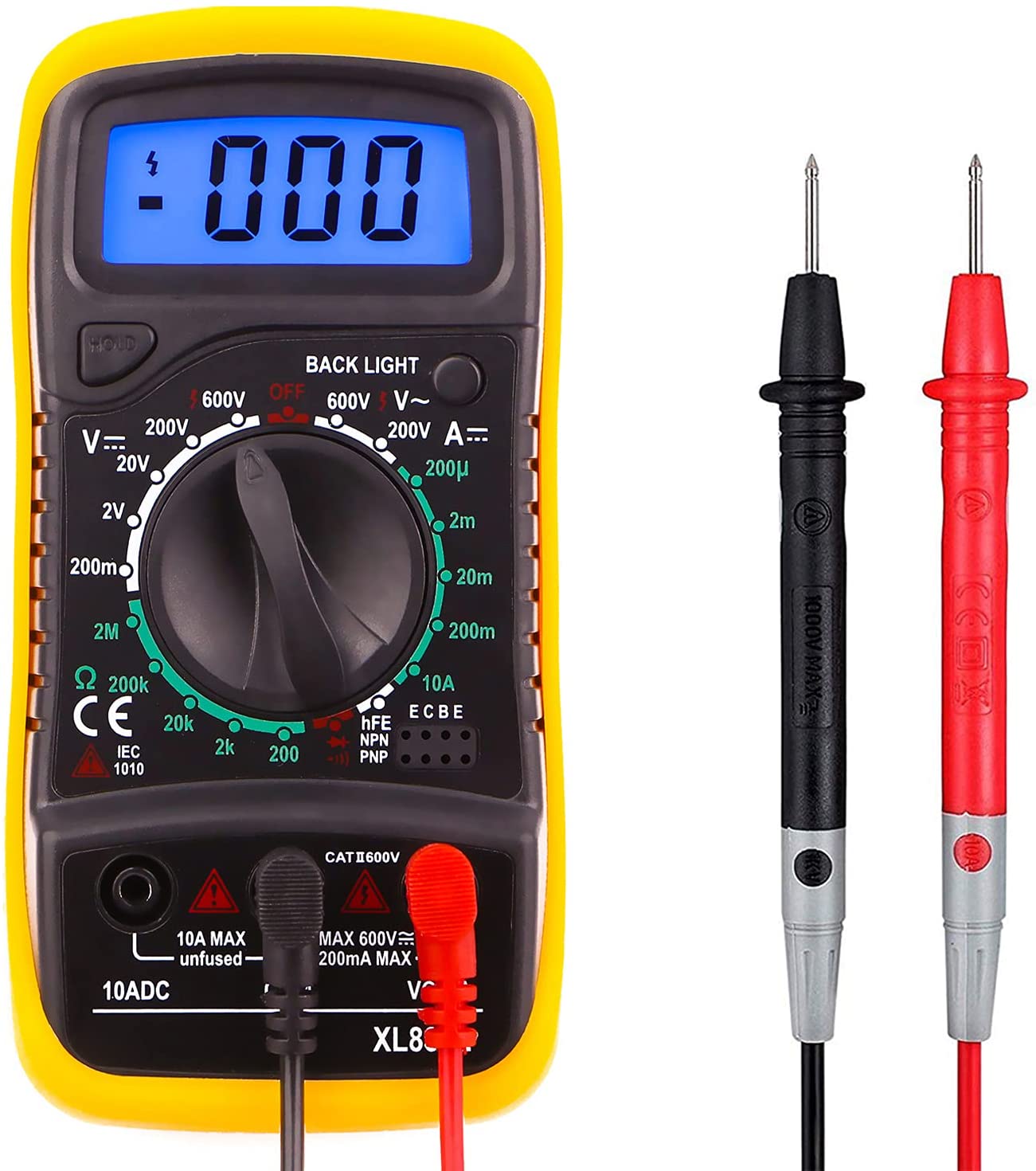
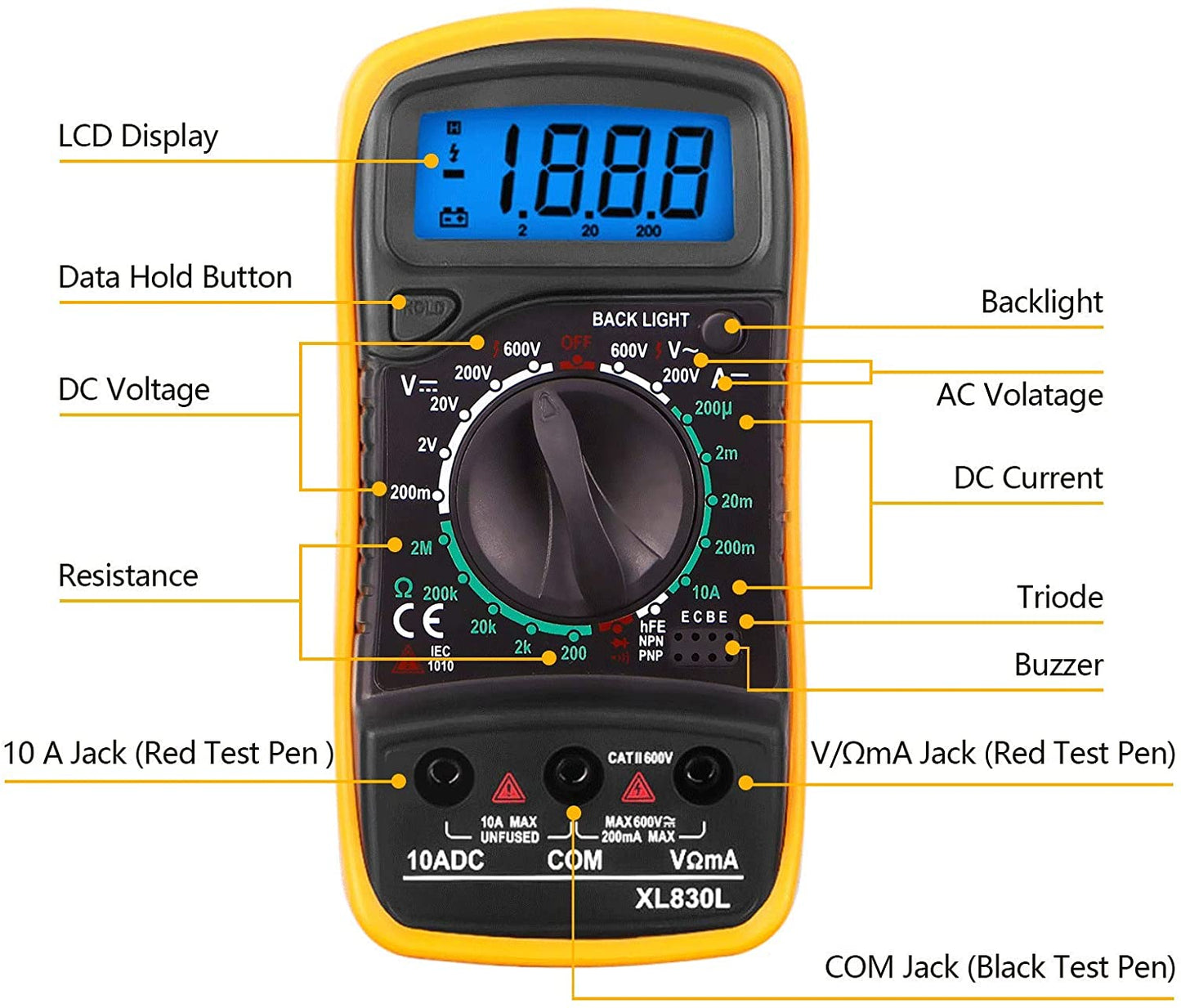
Take the guesswork out of basic voltage and resistance checks. This handheld digital LCD multimeter measures DC voltage, AC voltage, DC current and resistance, with diode and transistor test functions.
Supplied with red and black test leads plus a battery, it is a practical addition to a garage, hobby bench or low-voltage electronics toolkit.
Stocked locally and dispatched from Auckland, with free standard shipping within New Zealand.
Useful for Low-Voltage Workshop Tasks
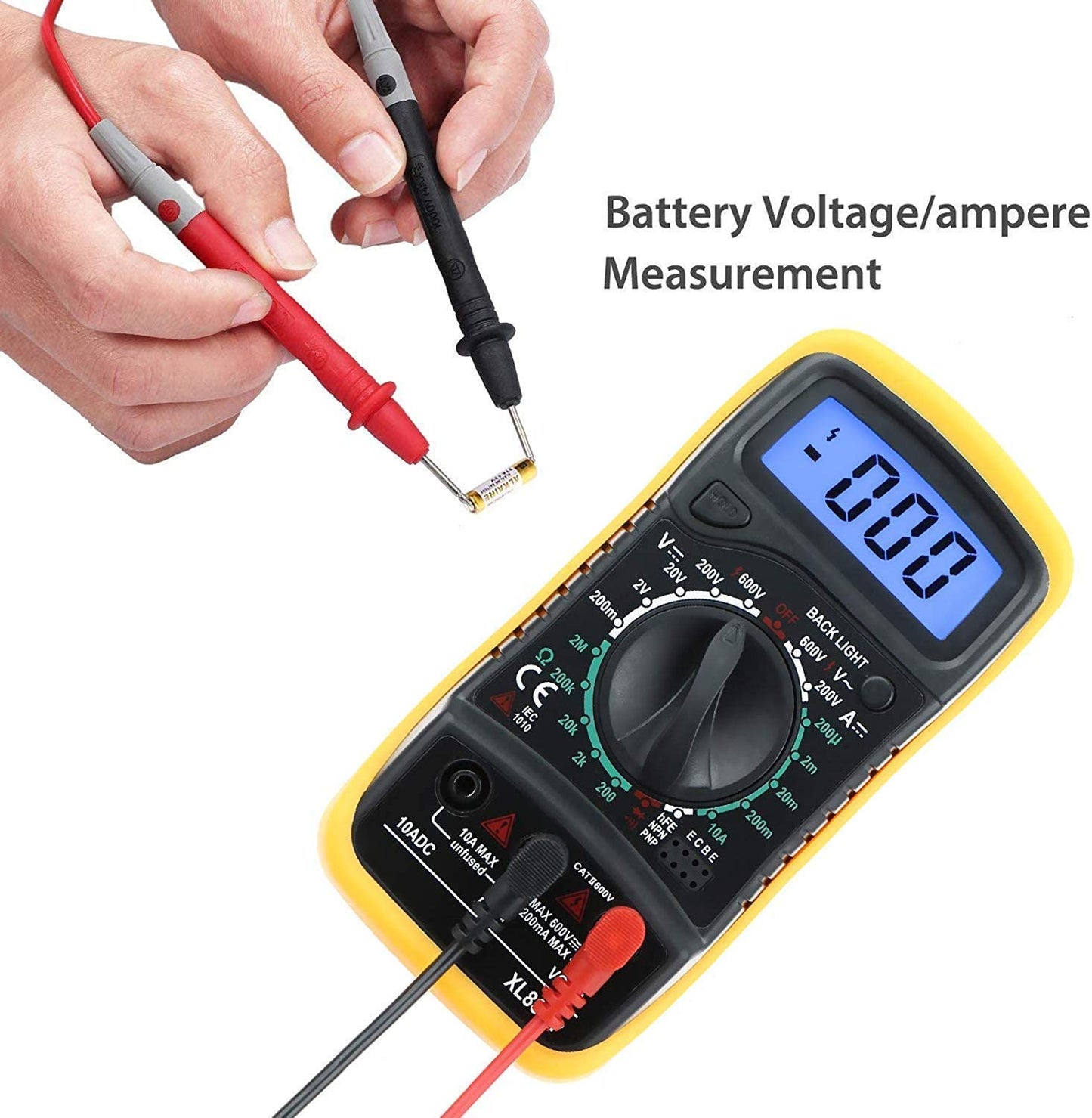
- 12V vehicle battery voltage: check terminal voltage using the appropriate DC voltage range. A voltage reading alone does not establish battery capacity or cranking performance.
- Trailer and vehicle wiring: investigate low-voltage supply readings and check disconnected components for resistance.
- Household batteries: measure suitable AA, AAA and 9V battery voltage using the correct range.
- Electronics projects: check resistors, diodes and supported transistor test functions on suitable low-energy circuits.
Use only within the limits established by the meter’s markings and supplied instructions. Some battery packs and solar circuits can deliver hazardous energy even at relatively low voltages.
Measurement Functions
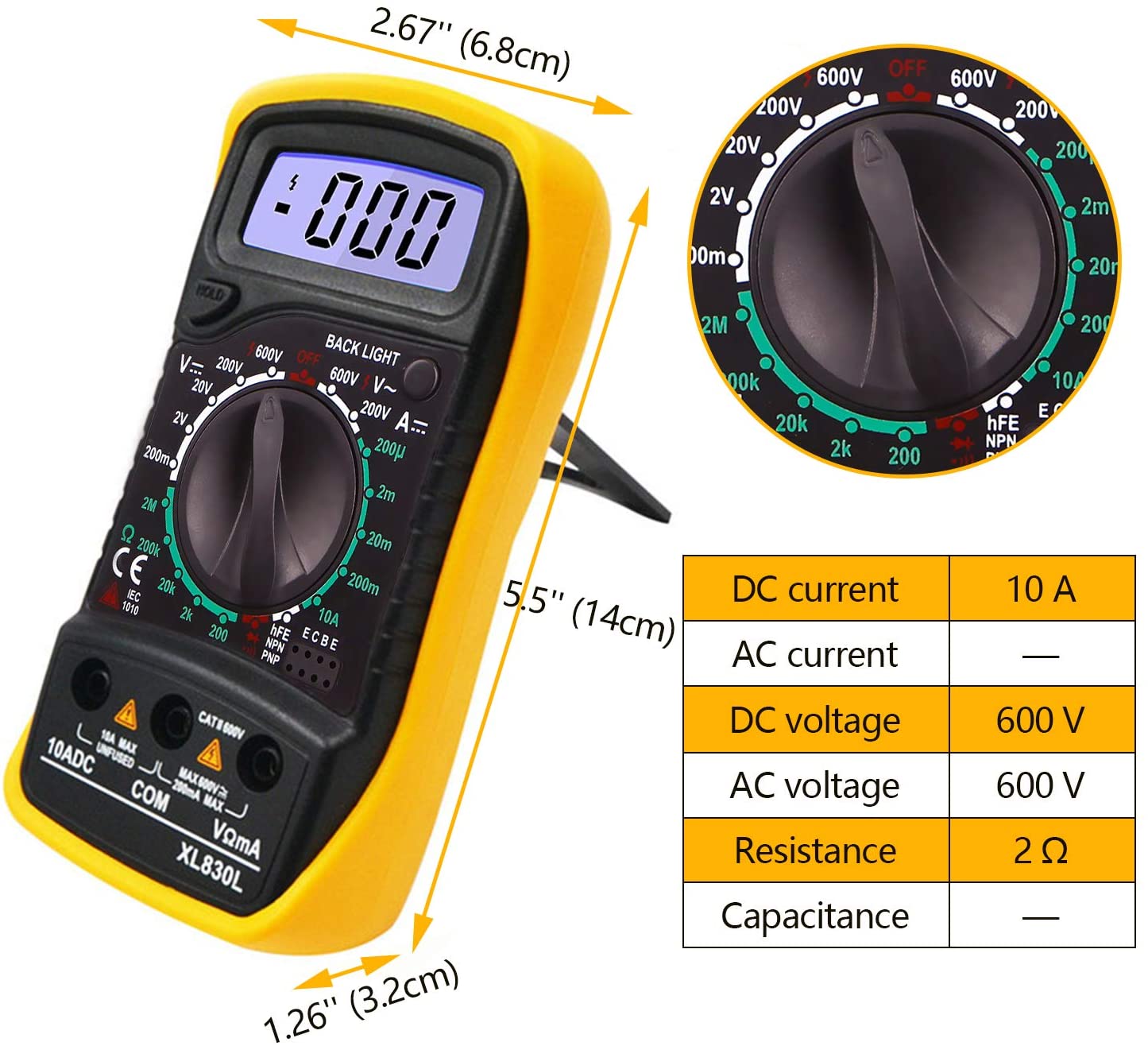
- DC voltage: selectable 2V, 20V, 200V and 600V ranges.
- AC voltage: selectable 200V and 600V ranges, as listed.
- DC current: listed ranges from 20µA to 10A.
- Resistance: listed ranges from 200Ω to 2MΩ.
- Component testing: diode and transistor test functions.
- Display: handheld 3½-digit digital LCD format.
Important Electrical Safety Limits
A measurement range is not a safety rating. The listed 600V range does not establish that this meter or its leads are suitable for household mains, switchboards or high-energy electrical systems.
Do not use it on mains circuits unless the meter, leads and documentation establish the appropriate safety category and operating limits. Use a suitably rated instrument and qualified help for mains work.
Never connect a meter in current mode directly across a battery or voltage source. Check input sockets, range selection and the manual before every measurement.
Original Technical Specifications
| DC voltage ranges | 2V / 20V / 200V / 600V |
|---|---|
| AC voltage ranges | 200V / 600V |
| DC current ranges | 20µA / 200µA / 2mA / 20mA / 200mA / 10A |
| Resistance ranges | 200Ω / 2kΩ / 20kΩ / 200kΩ / 2MΩ |
| Additional functions | Diode and transistor testing |
| Display | 3½-digit digital LCD |
| Power | Battery operated; one battery included |
| Condition | Brand new |
| Warranty | 6 months |
What’s Included?
- 1 × digital multimeter
- 1 × set of red and black test leads
- 1 × battery
Check whether battery installation is required before use. Product photo is for reference only.
The Technsave NZ Advantage
- Local NZ stock: dispatched from Auckland.
- Free standard NZ shipping: tracked delivery within New Zealand.
- Delivery estimate: 1–3 business days after dispatch, not a guaranteed arrival date.
- Local warranty: six-month warranty as stated in the original listing.
Frequently Asked Questions
Where can I buy an affordable digital multimeter in New Zealand?
Technsave at technsave.nz sells this handheld digital LCD multimeter with red and black test leads and a battery. Orders are dispatched from Auckland with free standard shipping within New Zealand and estimated delivery of 1–3 business days after dispatch.
Does this multimeter include test leads and a battery?
Yes. The listed package contains one digital multimeter, one set of red and black test leads and one battery. Read the operating instructions, inspect the leads and install the battery if required before testing.
Before Every Test
- Inspect the meter and leads for damage.
- Select the correct function, range and input sockets.
- Disconnect power before resistance, diode or transistor testing.
- Do not use the meter beyond its documented safety and input limits.
- Stop if the intended test exceeds your knowledge or the instrument’s verified capabilities.
Share